
Georgetown · Williamson County
Water Damage Dehumidifier and Structural Drying in Georgetown, TX
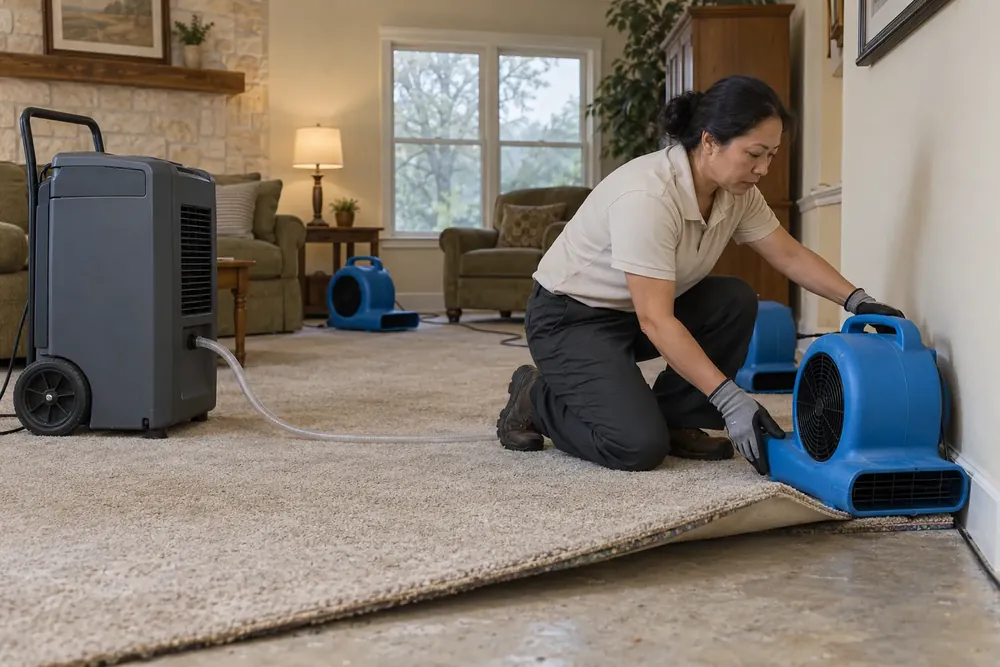
Our local water damage professionals handle structural drying and dehumidification in Georgetown, TX, with moisture checks for wet walls, floors and framing. If water remains after extraction, call now to discuss equipment, drying checks and the next steps for your home.
- Calls answered 24/7
- Local drying professionals
- Georgetown and surrounding towns
Structural Drying and Dehumidification Services in Georgetown
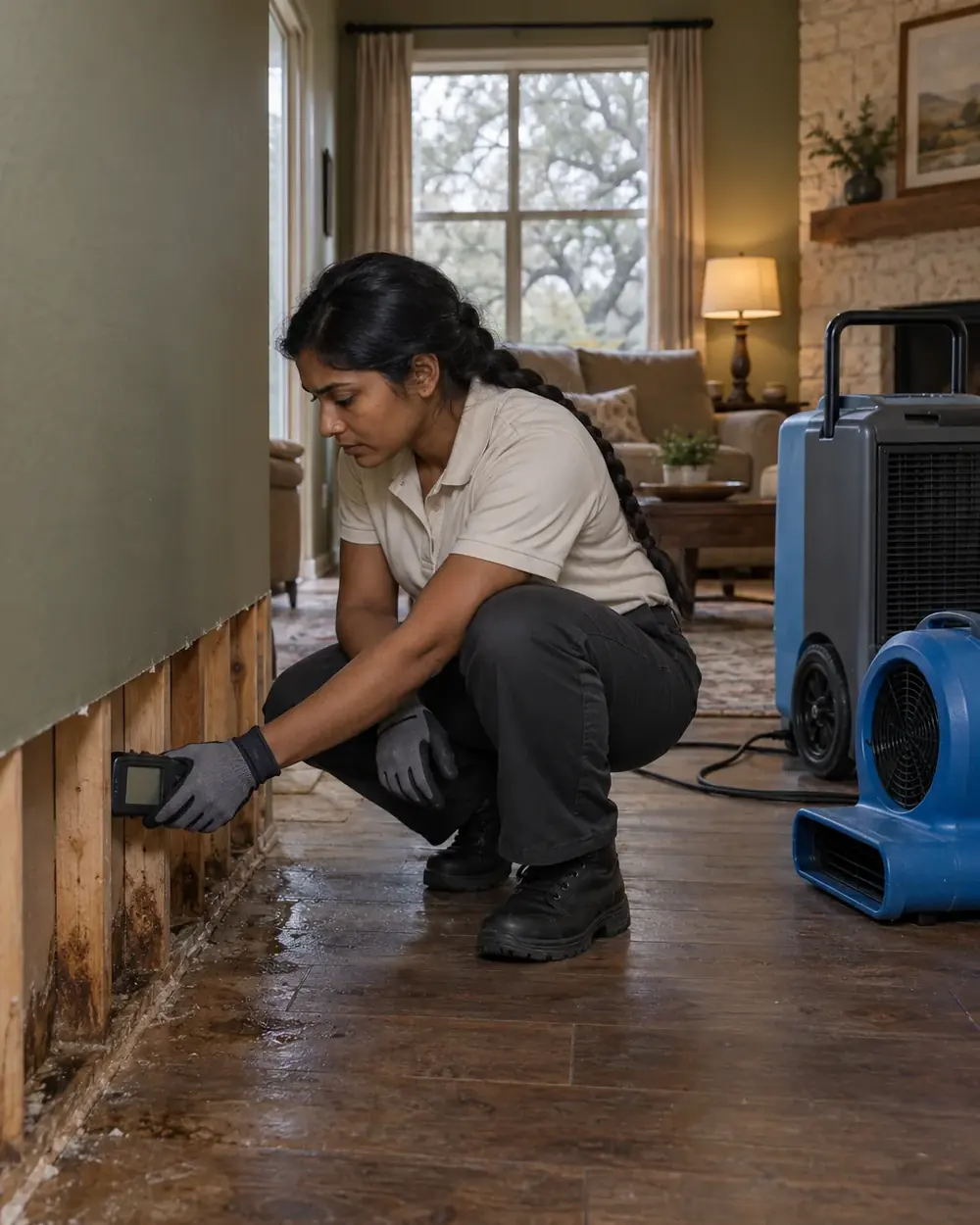
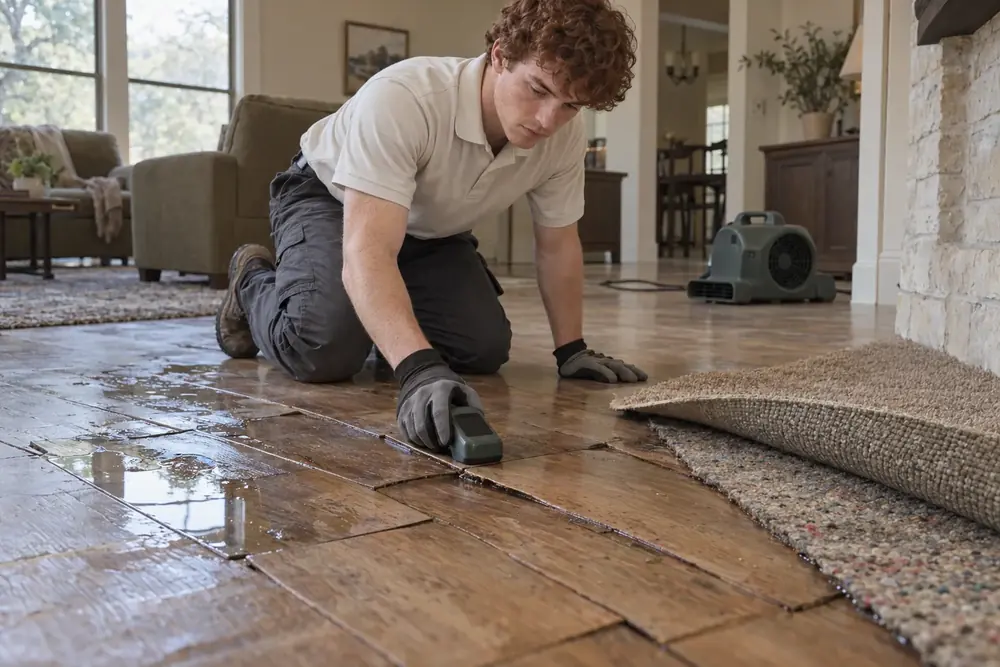
- If materials stay wet after extraction: Your technician checks moisture in walls, flooring and framing to identify the drying area; call about the assessment.
- If a room needs controlled drying: Your technician selects air movers and dehumidification equipment for the materials and conditions after checking contamination; call about equipment placement.
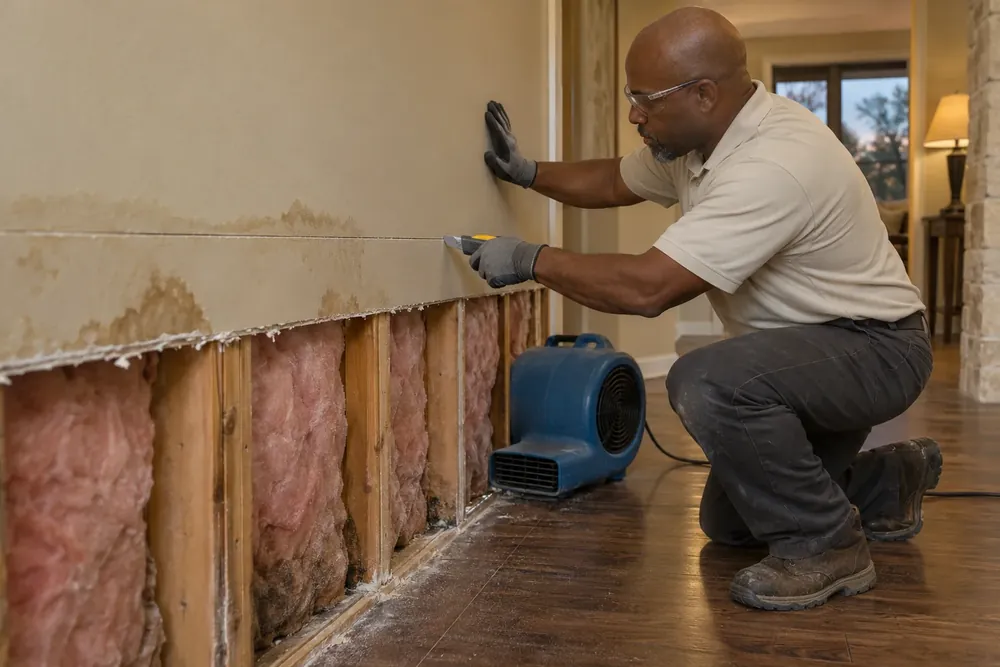
- If moisture is trapped behind finishes: Your technician assesses access to wall cavities and layers beneath flooring instead of relying on surface appearance; call about hidden wet areas.
- If equipment is running: Your technician tracks moisture readings and room conditions, then adjusts the drying setup as needed; call about progress checks.
- If repairs are the next step: Your technician documents moisture readings so the repair scope reflects retained and removed materials; call about readiness for rebuilding.
If You See Damp Walls or Swollen Flooring
- If walls remain damp after the puddle is gone: Moisture may still be held in drywall or framing; call about measured drying.
- If flooring edges swell or lift: Water may have reached underlying layers; call about checks beneath the finish.
- If condensation persists after a leak: Excess indoor moisture may be slowing drying; call about humidity control.
- If musty odor develops around wet materials: Hidden moisture or growth needs assessment; call and avoid disturbing the area.
- If materials remain wet beyond 48 hours: Longer exposure needs attention, even without visible growth; call now about the affected rooms.
If Materials Stay Damp, Start With a Call
- If your Georgetown home still feels damp after a leak, call now; describe the wet rooms and when you noticed the damage during the conversation.
- If moisture remains in building materials, your technician checks the source, safe access, contamination and initial moisture readings.
- If retained materials need drying, your technician places air movers and dehumidifiers after any necessary extraction and contaminated-material cleanup.
- If readings show continued moisture, your technician adjusts the setup and checks again; documented readings guide the next repair steps, and you can call about progress.
If Moisture Is Hidden, Access Affects Drying Costs
If moisture is confined to an open room, drying costs depend on the equipment, affected materials and monitoring needed. If water reaches enclosed cavities or multiple flooring layers, access and additional drying checks affect the scope. Equipment duration and material removal also matter; call about the wet areas.
Our local service partner will outline the proposed work and explain the price to you ahead of starting the job. If water damage drywall repair cost is part of your concern, ask how drying and rebuilding differ; call now or read water damage restoration cost factors.
If Damp Materials Need Attention, Call for Drying
- If you discover dampness late at night: Calls are answered 24/7; call about the leak and remaining wet materials.
- If you need help in Georgetown: Local water damage professionals discuss structural drying and the next checks; call about your rooms.
- If equipment costs need explaining: The proposed scope and price are discussed before work starts; call with questions about drying duration and monitoring.
- If you're documenting damage for insurance: Photos, moisture readings and a written scope record conditions and drying work; call about the records for your job.
If Drying Equipment Meets Water, Leave It Alone
- If plugs, outlets or the breaker are surrounded by water, then stay clear and call an electrician and the drying line; follow CDC electrical safety guidance.
- If sewage or contamination is possible, then don't start household fans and call about assessment; EPA clean-water guidance requires checking that water is sanitary first.
- If you see growth on wet surfaces, then leave the surfaces undisturbed, keep fans off and call about the moisture problem; EPA flood cleanup guidance warns against spreading contamination with equipment.
- If a wall or floor only looks dry, then leave painting and replacement for after moisture checks and call about readings; EPA flood cleanup guidance advises against sealing wet materials.
Related Water Damage Services
Structural Drying and Dehumidification FAQs
What should water damage mitigation near me include?
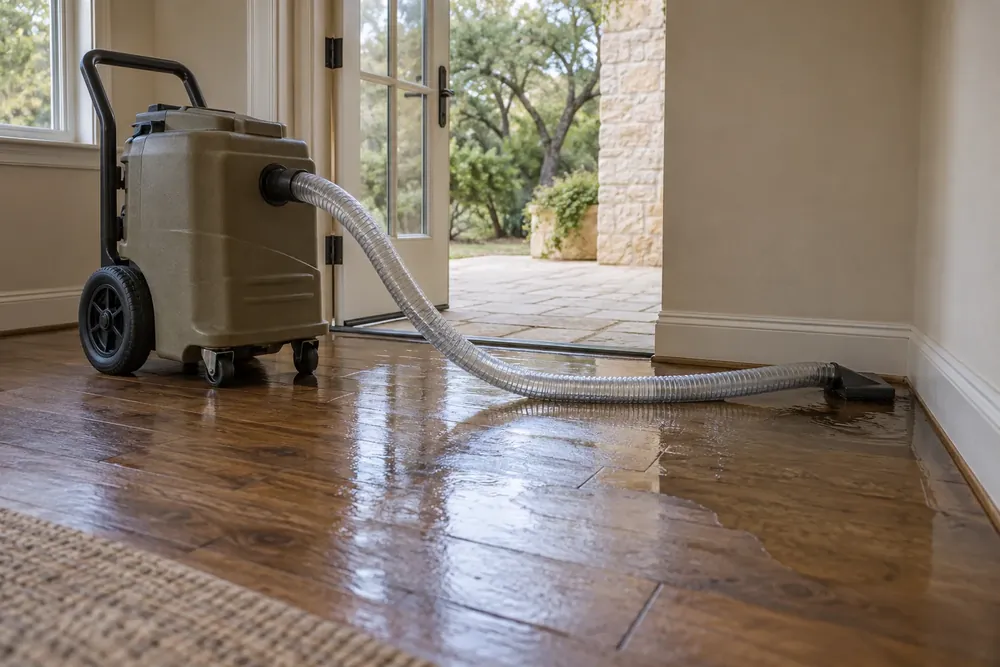
Water damage mitigation limits further damage through source assessment, extraction, appropriate material removal and measured drying. If your Georgetown home has fresh water damage under 48 hours old, call now about drying. If materials have stayed wet longer or sewage is involved, call about contamination assessment and the appropriate cleanup steps.
How much does water damage mitigation cost?
Mitigation cost depends on affected materials, access, contamination, equipment needs and monitoring. If standing water is still present, extraction adds to the scope. If water has moved behind walls, cavity access and material removal also matter. Call about your damage; the proposed work and price are explained before work begins.
Will a household dehumidifier dry wet walls?
A household dehumidifier may reduce room humidity, but dry air alone doesn't establish that wet walls are dry inside. If moisture remains behind paint, baseboards or flooring, your technician checks the materials and selects the drying setup. Call about the wet areas rather than relying on the room's feel.
Can water damage drywall repair near me start before drying finishes?
Drywall replacement and finishing need dry retained materials and a resolved water source. If clean-water damage leaves intact drywall without swelling, drying in place may be appropriate after assessment. If sewage contaminated the drywall, removal is needed. Call about drying and the repair sequence before closing a wall cavity.
Does structural drying always finish within 48 hours?
Structural drying has no fixed 48-hour completion time; material readings and conditions determine progress. If the leak is recent, call now because early drying matters. If materials have remained wet longer, call about further assessment. EPA's 24–48-hour guidance encourages prompt moisture control; materials still need assessment even when drying begins within that window.
If walls, flooring or framing stay wet, call now about structural drying, dehumidification and moisture checks in Georgetown.
Call (737) 773-5090