
If your house is flooded
Protect people from electrical and structural hazards, then call from a safe location. If your house is flooded, what to do first depends on whether you can safely remain inside. Leave an unsafe area; photographs, possessions and water removal can wait for safe access. Call emergency services for immediate danger and call for cleanup guidance from safety.
For a flooded house, what to do next depends on the water source and which rooms are affected. Outdoor floodwater and sewage need a different cleanup approach from a fresh supply-line leak. Explain the source during the call, even if you aren't sure where the water started.
If water is near electricity
Stay out of water near outlets, appliances, cords or electrical equipment. Do not operate a breaker panel while standing in water or cross a flooded room to reach it. If the main power can be turned off safely from a dry location, shut it off; otherwise, call an electrician for help and call for water damage guidance.
- If you smell gas or suspect a gas leak: Leave immediately, avoid switches or other ignition sources, and call emergency services or the gas utility from outside. Call for cleanup once you are safely away.
- If a ceiling is sagging or shedding material: Keep people out from underneath it. Do not puncture the ceiling or climb into the wet area. Call about the overhead damage.
If a pipe is leaking
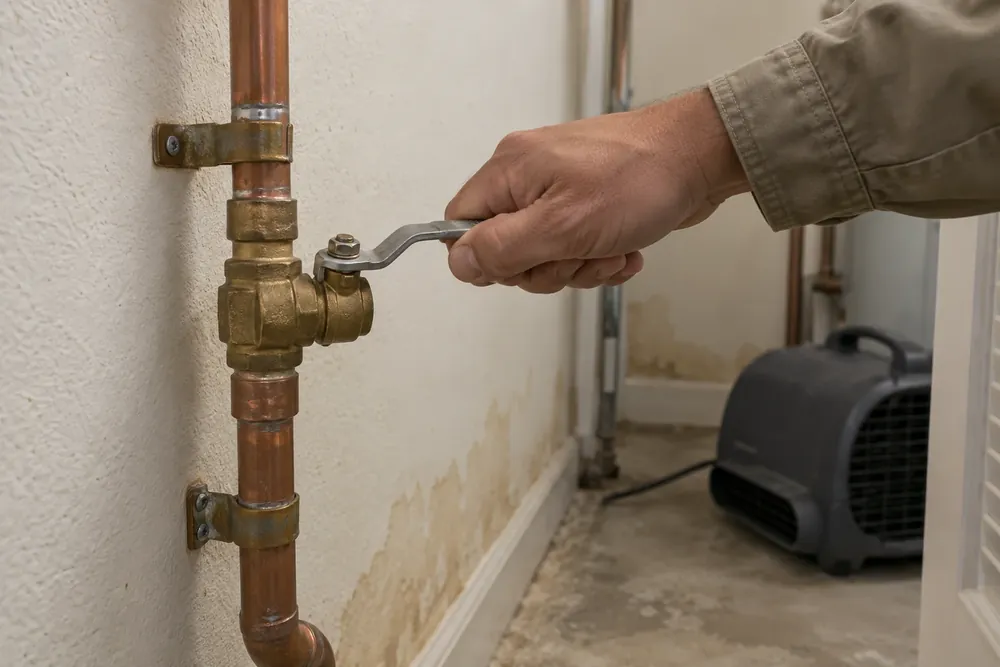
Shut off the home's water supply if the valve is safely accessible, and call about the leak and wet materials. If you need to know what to do if a water pipe bursts, the immediate priorities are safe isolation of the supply and help with both pipe repair and cleanup. You don't need to locate the valve before calling.
Georgetown's city guidance places the customer shutoff valve usually on the house side of the meter box. For customers on the city water system, leaks inside the home or between the meter box and home are the customer's responsibility. If you cannot find or operate the shutoff, call now and describe the ongoing flow; request plumbing help during the conversation.
If valuables are within reach
Move dry valuables only when you can reach them without entering a hazardous area. Leave plugged-in appliances and contaminated belongings alone. Keep children and pets away from wet rooms. If retrieving an item would require crossing standing water or going beneath a sagging ceiling, leave it in place and call.
If the damage can be photographed safely, take room views and close views of affected belongings for documentation for insurance. Share observations during the call; photographs aren't a requirement for starting the conversation. Your technician documents moisture readings and the written cleanup scope.
If you are considering household cleanup
The water source determines which cleanup actions are appropriate. A clear appearance doesn't rule out contamination, and fresh water needs prompt attention too.
- If clean-source water arrived within 48 hours: Call for extraction and drying guidance. Don't wait for the 48-hour mark or assume towels have dried the layers underneath.
- If materials have stayed wet longer than 48 hours: Call about hidden moisture and possible mold before directing household fans across the damage.
- If sewage or unknown floodwater is present: Don't use a household shop vacuum for cleanup. Keep away from the water and call for contaminated-water cleanup.
- If HVAC equipment or ducts got wet, or contamination is suspected: Don't run the system across the affected materials as a drying shortcut. Call about safe operation and inspection.
If you need a short checklist
Call now from a safe location and use the checklist only where access is safe. No cleanup task has to be finished before the call.
- Keep people away from wet electrical equipment and unstable ceilings; call about the hazard.
- Shut off an accessible water valve without entering danger; call even if the supply is still running.
- Leave unsafe retrieval or photography for later; call and describe what you can see.
- Discuss extraction, drying and documentation during the call.