
If building materials stay wet, mold has moisture that supports growth. Water damage with mold involves both a moisture problem and a separate question about the affected material. A dry-looking surface doesn't establish that the layers behind it are dry. Call now to discuss where water entered and how long the materials have been wet.
If the leak is under 48 hours old
If a recent leak has soaked the room, prompt water removal and drying address the moisture that supports growth. EPA recommends drying wet materials within 24 to 48 hours. The timing doesn't establish that mold is absent; call now about drying.
- If the water came from a supply line, shut off the household water if the valve is safely accessible, and call for water damage cleanup.
- If the water came from a toilet backup or outdoor flooding, avoid contact and call; the source changes the cleanup approach even when the water arrived recently.
- If the water is gone but carpet padding or wall cavities remain damp, call for structural drying rather than judging dryness by touch.
If materials have stayed wet longer
If wetness has continued beyond 48 hours, call now and describe any recurring damp patches, odors or changes in the material. Longer exposure gives mold more opportunity to grow. Wet paper, wood and carpet supply material that mold can grow on.
For ceiling water damage mold concerns, keep clear of sagging drywall and call. A ceiling stain alone doesn't identify mold. If moisture could be hidden above the ceiling, call to discuss drying.
If you searched “what does mold spores look like,” individual spores are microscopic; visible patches aren't individual spores. Appearance alone doesn't identify the species or establish the condition of a wall cavity. Call about the water damage and describe what you see without opening the affected surface.
If you need to understand the drying work
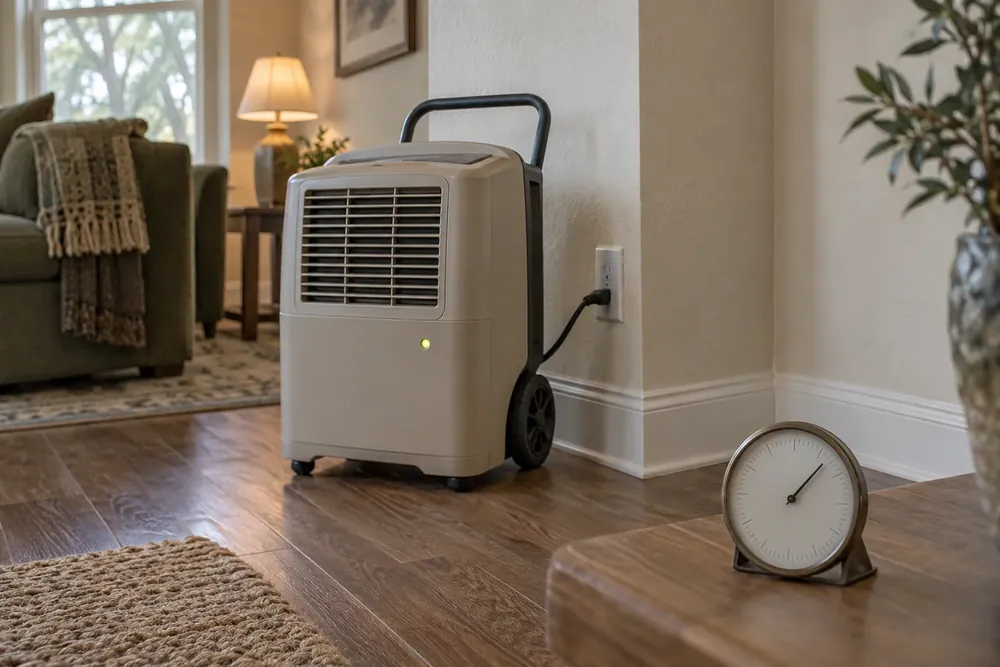
If moisture remains in the structure, drying targets water held in building materials and excess moisture in the air. Extraction handles standing water; air movement and dehumidification support drying. Your technician uses material moisture readings to track progress. A room humidity reading answers a different question from a reading taken in wet wood or drywall. Call to discuss the affected layers.
If visible growth needs separate attention
If suspected mold accompanies the water damage, Texas treats mold assessment and remediation as separate regulated work. The Texas Department of Licensing and Regulation licenses those activities, with exemptions defined in state rules. Structural drying doesn't replace mold assessment or remediation; call about the water damage and describe the suspected growth.
If you're looking for water damage and mold restoration, keep the scope of water cleanup distinct from licensed mold work. One of our local water damage partners will explain the water removal and drying scope. Describe suspected growth during the call so the water damage discussion accounts for the condition of the room.