
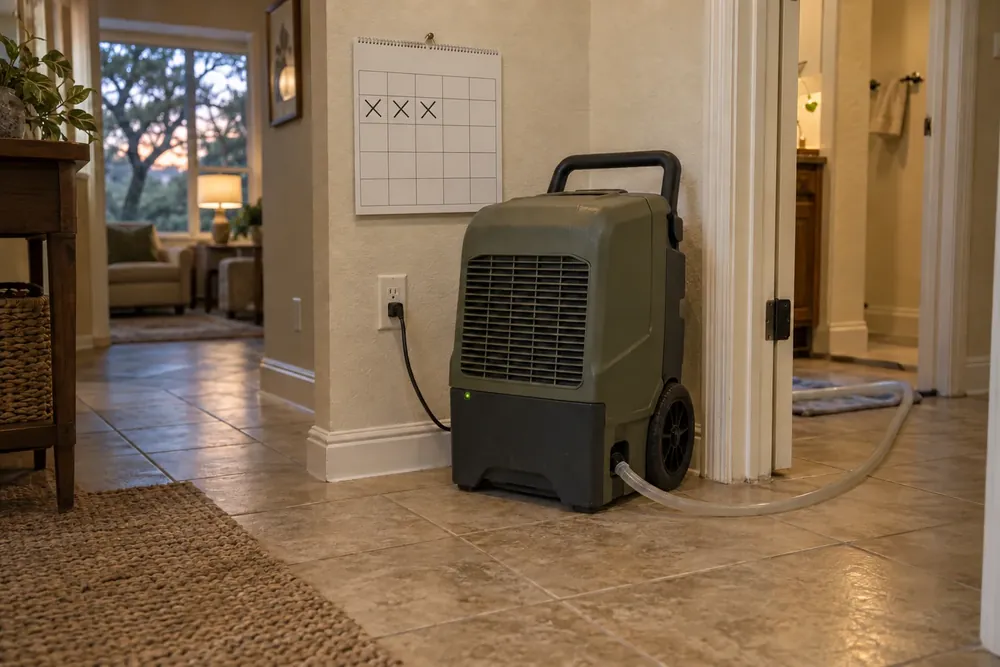
If you are counting the days
Drying ends when affected materials meet their drying goals, rather than after a fixed number of days. EPA guidance says drying a flooded home commonly takes several days to weeks. A smaller plumbing leak needs its own assessment; the flooded-home range isn't a prediction for every wet room. Call for a plan based on the source, affected materials and moisture readings.
- If clean-source water arrived less than 48 hours ago: Prompt extraction and drying help limit damage. Clear appearance alone doesn't establish that water is clean. Call now and describe the source.
- If materials have stayed wet longer than 48 hours: Hidden moisture and possible mold need attention before ordinary drying continues. Call and share when you first noticed the water.
- If sewage or outdoor floodwater entered: Contamination changes the cleanup sequence regardless of elapsed time. Avoid the affected rooms and call for cleanup guidance.
If standing water remains
Extraction comes before drying moisture held inside building materials. Your technician assesses the wet area, records initial readings and identifies materials that need removal or access for drying. If water is still entering, the leak also needs repair; drying equipment cannot compensate for an active source. Call to discuss extraction and the source together.
If puddles are gone but walls remain wet, structural drying and dehumidification addresses moisture left behind. The water damage restoration timeline includes assessment, extraction, cleanup where needed, controlled drying, progress checks and repairs. Call to discuss the stage your home has reached.
If progress seems slow
Humidity, absorbent materials and inaccessible wet layers can extend drying. A floor surface can look dry while moisture remains underneath. Your technician checks the affected layers and adjusts the plan when readings show that progress has stalled.
- If outdoor air is warm and humid: Open windows can work against controlled drying. Follow the window instructions for the drying setup and call about unexpected condensation.
- If carpet or wood covers a wet floor: Padding, backing or the subfloor may need separate attention. Call about damp seams, lifted edges or flooring changes.
- If moisture is trapped inside a wall: Opening or removing affected material may be necessary to reach it. Call rather than sealing or repainting the surface.
If the surface feels dry
Moisture readings establish progress more reliably than touch or appearance. Your technician compares affected materials with appropriate drying goals, including readings from unaffected materials where useful. Room humidity alone doesn't establish that a wall or floor is dry enough to close or refinish. Call to discuss the measurements supporting the next stage.
If repairs are being planned, ask during the call for the affected locations, recorded moisture readings and remaining work in the written scope. Photos and moisture records provide documentation for insurance. Repairs should follow confirmed drying rather than an assumed calendar deadline.
If you plan to stay home
Staying home depends on safe access, contamination and which rooms remain usable. Drying equipment adds noise, airflow, warmth and cords to occupied spaces. During the call, discuss sleeping areas, access to essential rooms and equipment operation with your technician.
- If unaffected rooms remain safely accessible: Keep people and pets away from equipment and wet areas, follow the operating instructions, and call about disrupted access.
- If sewage, suspected mold or damaged electrical systems affect occupied spaces: Avoid those spaces and discuss whether staying elsewhere is necessary. Call for guidance on the affected rooms.
- If equipment interrupts sleep: Ask about placement and the operating plan rather than switching machines off without guidance. Call to discuss the problem.