
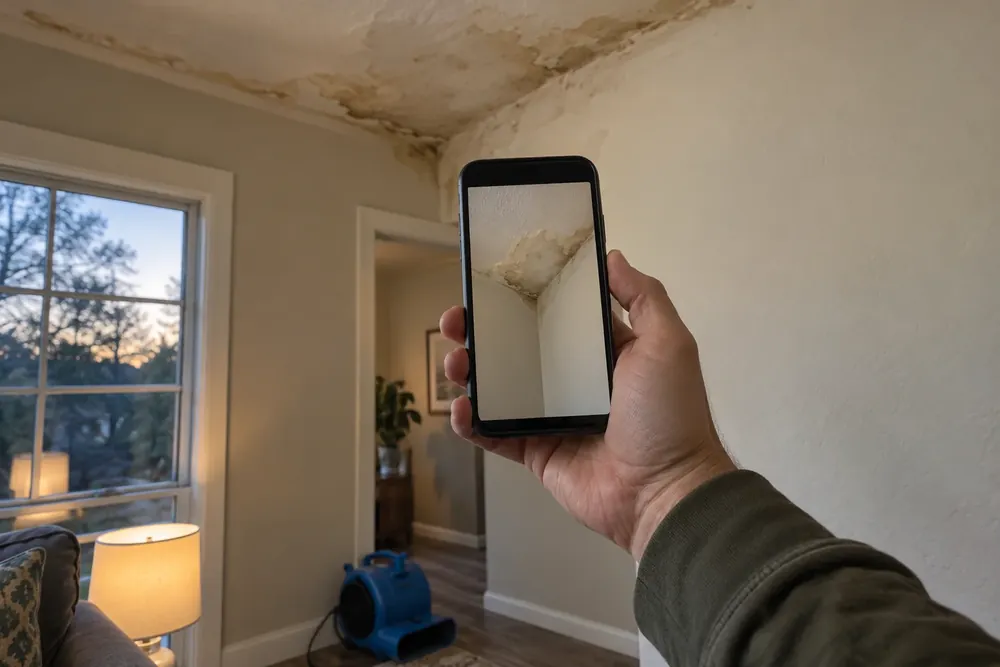
If water escaped suddenly or leaked over time
If water escaped suddenly or leaked over time, document when you discovered it and the affected materials. The Texas Department of Insurance identifies a burst pipe or broken washer hose as examples of sudden damage. Your policy's terms decide coverage.
- If a pipe or appliance failed suddenly, record when you discovered the water and what you observed. Keep those observations with your photos and call for restoration.
- If staining developed over weeks or a leak kept recurring, describe the history accurately and call to address the wet materials.
- If you don't know when the leak began, separate the discovery date from the unknown start date. Keep what you know in the damage records and call for a moisture assessment.
For a water damage home insurance claim, document the cause and observed damage without guessing. A stain doesn't establish how long a leak lasted. Call while the source and affected materials are assessed.
If outdoor water entered the home
If outdoor water entered the home, document its entry point and the rooms it reached. Water rising from outside differs from a broken supply pipe inside. Record where the water entered and keep photos of its path.
If runoff crossed the threshold, record that observation without guessing at the cause. If a roof opening let rain inside, report that path instead. The source needs documenting in either case. Call for cleanup now and request damage records for your insurance documentation.
If you can photograph the damage safely
Useful photos show the affected rooms, visible source, damaged surfaces, and belongings without exposing you to hazards. For a ceiling water damage insurance claim, include the stain's location and a wider room view from a safe position. Don't stand under a sagging ceiling.
- If the room is safe to view, take an overview and close views of visible damage; call and share what you see.
- If belongings are wet, photograph them and retain identifying details and purchase receipts you already have; call for the material assessment.
- If water is near electricity or the ceiling is unstable, stay out and leave those photos to the on-site assessment; call from a safe place.
The Texas Department of Insurance recommends taking photos or video as soon as it's safe. Call to discuss safe cleanup and documentation together.
If you need records from the restoration visit
Your technician documents conditions with photos, moisture readings, and a written scope. For water damage restoration insurance documentation, request the affected locations, materials, proposed drying work, and items requiring removal. Keep invoices and receipts with those records.
If you're gathering broken pipe water damage insurance paperwork, keep the plumbing repair record alongside the restoration scope. The pipe repair and resulting building damage are separate items to describe. No work starts until our local service partner has reviewed the planned scope and cost with you. Call to discuss the work and request documentation.
If you're deciding what you'll pay
Keep a written scope, invoices, and receipts to document the work and its cost. Photos and moisture readings record the affected materials. Your policy and insurer decide coverage.
If temporary measures are needed to limit further damage, keep receipts and document the condition. If permanent rebuilding is proposed, retain photos and moisture readings of the damage before repairs conceal it. Call now for restoration planning; the restoration cost guide explains what changes the work scope.